

Quick Summary of Article
Introduction
The Romanian deadlift may be the hardest simple exercise you can do in the gym. Like the squat, the Romanian deadlift (or RDL) looks fairly straightforward, but doing it well takes practice and precision. The payoff, however, is great — and strong-looking glutes, hamstrings, and lower back muscles are just the beginning. Here's a primer on how to perform the Romanian deadlift correctly and avoid common mistakes.
Romanian Deadlift: Step-by-Step Instructions
Stand with your feet shoulder-width apart and parallel, holding a pair of dumbbells in front of your thighs, palms facing you. Draw your shoulders back, unlock your knees and engage your core as you slowly hinge at your hips, sending your butt back. Maintaining your lower back's natural arch, lower the weights until your torso is nearly parallel to the floor. Keep your head neutral and the weights close to your body throughout the movement. When you can't descend farther without rounding your back (you should feel a deep stretch in your hamstrings), pause, and push your hips forward to return to the starting position.
Common Romanian Deadlift Mistakes
Avoid these RDL mistakes to make the most of the exercise and potentially save yourself an injury.
1. Rounding your back
At first glance, the RDL looks like a toe-touch movement. But it's really a "hip-hinge" movement: Nearly all of the action takes place between the pelvis and the thighbones — not in your lower back.
2. Trying to place the weights on the floor
In the RDL, the end point of the lift is the moment your hamstrings are fully stretched. Work within your limits.
3. Allowing the weights to drift forward
As you fold forward, the weights should stay close to your legs. The farther forward the weights drift, the more pressure is outsourced to your lower back.
4. Bending your knees too much — or too little
Your knees should bend 10 to 20 degrees as you lower the weights. Too much or not enough bend in your legs shifts the focus of the move.
Muscles Worked By the Romanian Deadlift
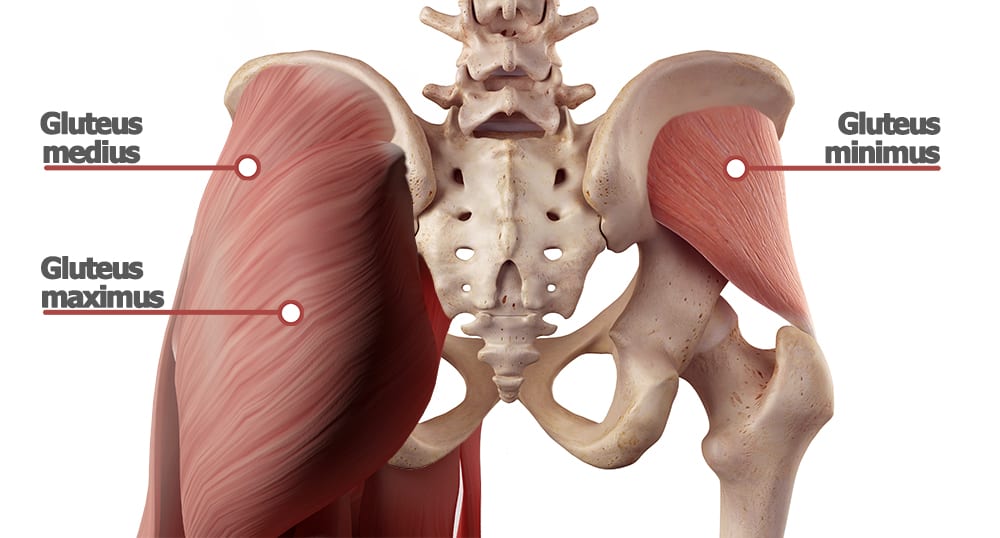
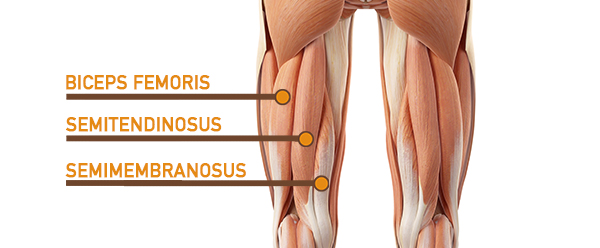
Like all deadlift variations, the RDL is a posterior chain exercise, focusing primarily on muscles on the back side of your body. These include:
- Glutes
- Hamstrings
- Adductors
- Spinal erectors
- Calves
Stiff-Legged Deadlift vs Romanian Deadlift
Opinions on the difference between these two exercises vary among trainers. Here's a simple explanation for distinguishing the two moves:
- Starting position: The stiff-leg deadlift starts with the weight on the floor, while the Romanian deadlift begins with the lifter standing.
- Implementation: The stiff-leg deadlift is often performed with a loaded Olympic bar, while the Romanian deadlift can be done with dumbbells.
- Lowering the weight: In the Romanian deadlift, the lifter lowers the weight under control, while in the stiff-leg deadlift, the lifter essentially drops the bar to the floor with minimal control.
Alternatives to the Romanian Deadlift
If you're looking to switch up your posterior chain workout, here are a few alternative exercises to try:
- Swiss ball leg curl
- Dumbbell deadlift
- Bulgarian split squat
- Single-leg deadlift
- Other options: Lying glute bridge, side plank, side-lying clamshell, hyperextensions, glute-ham raises, and step-ups.
Remember that building strength and power takes time and consistency. Incorporate the Romanian deadlift and its alternatives into your training routine, and watch your posterior chain muscles thrive.

.jpeg)
.png)


.png)